Impact of Antiretroviral Therapy (ART) on HIV Treatment Outcomes

This study presents an analysis of the impact of Antiretroviral Therapy (ART) on HIV treatment outcomes, highlighting its role in reducing viral load, improving immune function, and enhancing the quality of life for people living with HIV. ART has significantly transformed HIV from a life-threatening condition to a manageable chronic disease, reducing morbidity and mortality rates worldwide. By suppressing viral replication, ART not only prolongs life expectancy but also minimizes the risk of transmission, playing a crucial role in achieving global HIV prevention goals. However, challenges such as drug resistance, adherence issues, and disparities in access to treatment continue to affect its effectiveness. Additionally, long-term ART use raises concerns about side effects and comorbidities, necessitating ongoing research into improved formulations and treatment strategies. This study examines ART’s contributions to HIV management, addressing both its successes and the barriers that must be overcome to ensure equitable and sustainable treatment outcomes. For details, vist.

Ethical and legal considerations in artificial intelligence

Artificial intelligence1 (AI) stands up at the leading edge of technical advancement, covering a large selection of sophisticated devices as well as strategies. From AI protocols with the ability of trend awareness to natural language processing units that know and create human-like messages, AI has penetrated assorted markets (Xu et al., 2022). Medical care gains from the analysis of AI, money uses anticipating protocols, and self-governing motor vehicles take advantage of computer system sight. This technological development delivers a thorough exploration of the widespread garden of AI apps, stressing their transformative effect throughout sectors (Chu et al., 2022). In the powerful world of AI, reliable and lawful points to consider when participating in a critical job fit its accountable release. As modern, legal, and ethical AI technologies innovate, issues relating to prejudice, clarity, and responsibility come to be considerably noticeable. AI emphasizes the crucial necessity for reliable platforms as well as lawful shields to control AI growth and documents (Yuliana, 2023). As AI penetrates culture, moral, and lawful reviews become important. Mathematical prejudice, shown through face acknowledgment units presenting genetic differences, lifts problems concerning justness as well as equity. OpenAI’s GPT-32, a highly effective foreign language design, accentuates the accountable use of AI-generated material to avoid false information (Couture et al., 2023). Ethical factors to consider additionally come up in AI-driven decision-making, like in working with procedures using computerized return to filtering. Lawful structures, such as the European, for more details: Vist

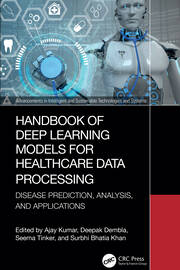
Deep Learning Models for Electronic Health Record Data Analysis

The electronic health record (EHR) is an essential data resource that improves medical decision-making and health service delivery monitoring and allows for developing predictive models for early risk scoring, among other applications. EHR-based predictive models have improved with the use of deep learning (DL) techniques, which excel when there are large amounts of data and potentially complex relationships between input features and the target prediction. However, EHR data possess unique characteristics such as complicated dependency structures between events, event frequency, and missing patient subpopulation data, to name a few issues (Lee et al., 2024). These dimensions of EHR data have led to the use of DL methods that are not typically used in standard image, speech, and natural language processing but instead are specifically designed to address the demands of EHR data analysis, for details: Read More.

Quantum Computing and Generative Adversarial Networks (GANs): Ethics, Privacy, and Security

Advancement in technology has demonstrated a shift in application, interpretability, and technological acceptance. Quantum Computing and Generative Adversarial Networks (GANs) represent two transformative domains with immense potential for innovation and disruption. This study examines the rise of ethical, privacy, and security considerations accompanying these technologies, highlighting their importance and defining the core emphasis on overlapping ethical, data privacy, and security problems and their mitigation. Starting with an overview of quantum computing and GANs, the study outlines their principles and practical applications, elucidating quantum algorithms’ revolutionary power and unique challenges. It explores how generative models reshape industries while examining ethical dilemmas introduced by synthetic content generation. Privacy concerns are evaluated, focusing on privacy-enhancing technologies. Security challenges are scrutinized, proposing strategies to fortify these technologies against adversarial threats.

https://www.igi-global.com/chapter/quantum-computing-and-generative-adversarial-networks-gans/367342

Artificial Intelligence Assisted Internet of Medical Things (AIoMTs) in Sustainable Healthcare Ecosystem

The integration of the Internet of Things (IoT) and artificial intelligence (AI) with advances in medical devices exemplifies the recent development in the medical sector, specifically in this digital healthcare era like the Internet of Medical Things (IoMTs). This makes it simpler for patients to relax, for health problems to be solved quickly and modestly, for hospital medications to be given right away, and for healthcare to be more personalized, thus facilitating well-being management. All of these things together make up the AI-assisted Internet of Medical Things (AIoMTs). AI and other key support technologies like big data, mobile internet, cloud computing, microelectronics, and others have made it possible to process the collected patient data to get better insights. This has turned traditional healthcare into an all-around, efficient, and personalized experience. During this time, AI applications in medicine became more popular worldwide, and people who were sick with the virus were saved with the help of intelligent technologies and the algorithms that went with them. The AIoMT made it leisurely to collect, analyze, and make sense of a huge amount of patient information so that healthcare and well-being monitoring can be carried out effectively through different electronic devices. This chapter comprehensively surveys several wearable medical electronics in the AIoMT. There has been a focus on the known and commonly used medical devices, such as the electronic signals for AIoMT sensors. In addition, the AIoMT architecture shows how smart sensors can be used to collect, combine, and control data for smart healthcare structures. The chapter further reviews the challenges of electronic devices in the AIoMT, like data security threats, data interoperability, and regulatory concerns, which are further addressed to improve medical standards of operation for medical personnel, patients, and other medical stakeholders. Finally, open research issues for future research in AIoMT are highlighted.

Details at: https://onlinelibrary.wiley.com/doi/abs/10.1002/9781394287024.ch3

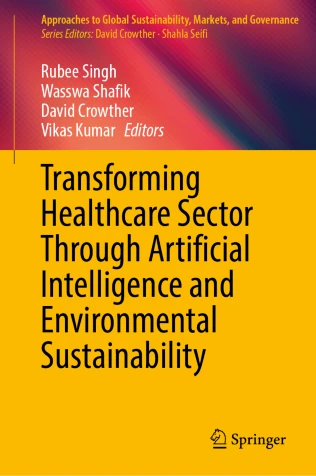
New Book: Transforming Healthcare Sector Through Artificial Intelligence and Environmental Sustainability

This book explores the intersection of artificial intelligence (AI) and sustainability in healthcare, focusing on how AI technologies are transforming medical practices while promoting environmentally responsible operations. It examines how AI-driven tools like machine learning and data analysis enhance diagnostic accuracy, streamline treatment planning, and personalize patient care by analysing large datasets, including genetic information. Additionally, the book addresses how AI can support sustainable healthcare practices by optimizing resource usage, such as energy consumption in hospitals, and improving supply chain management to reduce environmental impact. Practical case studies demonstrate how these technologies are being implemented to improve patient outcomes and achieve sustainability goals.

The book considers the integration of AI into human resource management within healthcare, discussing AI’s role in recruitment, performance management, and employee retention aligned with sustainability objectives. Ethical and regulatory issues surrounding AI adoption, such as data privacy and algorithmic transparency, are thoroughly examined, with an emphasis on creating responsible and equitable AI systems. Designed for healthcare professionals and administrators, this book provides practical strategies and real-world examples of AI implementation in sustainable healthcare, offering a balanced view of the opportunities and challenges ahead

Details at: https://link.springer.com/book/9789819795543

error: Content is protected !!