
Quantum Computing and Generative Adversarial Networks (GANs): Ethics, Privacy, and Security

Advancement in technology has demonstrated a shift in application, interpretability, and technological acceptance. Quantum Computing and Generative Adversarial Networks (GANs) represent two transformative domains with immense potential for innovation and disruption. This study examines the rise of ethical, privacy, and security considerations accompanying these technologies, highlighting their importance and defining the core emphasis on overlapping ethical, data privacy, and security problems and their mitigation. Starting with an overview of quantum computing and GANs, the study outlines their principles and practical applications, elucidating quantum algorithms’ revolutionary power and unique challenges. It explores how generative models reshape industries while examining ethical dilemmas introduced by synthetic content generation. Privacy concerns are evaluated, focusing on privacy-enhancing technologies. Security challenges are scrutinized, proposing strategies to fortify these technologies against adversarial threats.

https://www.igi-global.com/chapter/quantum-computing-and-generative-adversarial-networks-gans/367342
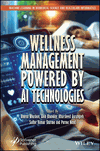
Artificial Intelligence Assisted Internet of Medical Things (AIoMTs) in Sustainable Healthcare Ecosystem

The integration of the Internet of Things (IoT) and artificial intelligence (AI) with advances in medical devices exemplifies the recent development in the medical sector, specifically in this digital healthcare era like the Internet of Medical Things (IoMTs). This makes it simpler for patients to relax, for health problems to be solved quickly and modestly, for hospital medications to be given right away, and for healthcare to be more personalized, thus facilitating well-being management. All of these things together make up the AI-assisted Internet of Medical Things (AIoMTs). AI and other key support technologies like big data, mobile internet, cloud computing, microelectronics, and others have made it possible to process the collected patient data to get better insights. This has turned traditional healthcare into an all-around, efficient, and personalized experience. During this time, AI applications in medicine became more popular worldwide, and people who were sick with the virus were saved with the help of intelligent technologies and the algorithms that went with them. The AIoMT made it leisurely to collect, analyze, and make sense of a huge amount of patient information so that healthcare and well-being monitoring can be carried out effectively through different electronic devices. This chapter comprehensively surveys several wearable medical electronics in the AIoMT. There has been a focus on the known and commonly used medical devices, such as the electronic signals for AIoMT sensors. In addition, the AIoMT architecture shows how smart sensors can be used to collect, combine, and control data for smart healthcare structures. The chapter further reviews the challenges of electronic devices in the AIoMT, like data security threats, data interoperability, and regulatory concerns, which are further addressed to improve medical standards of operation for medical personnel, patients, and other medical stakeholders. Finally, open research issues for future research in AIoMT are highlighted.

Details at: https://onlinelibrary.wiley.com/doi/abs/10.1002/9781394287024.ch3

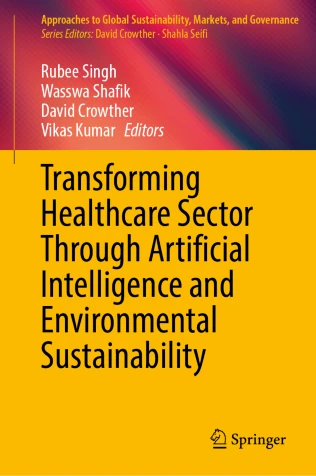
New Book: Transforming Healthcare Sector Through Artificial Intelligence and Environmental Sustainability

This book explores the intersection of artificial intelligence (AI) and sustainability in healthcare, focusing on how AI technologies are transforming medical practices while promoting environmentally responsible operations. It examines how AI-driven tools like machine learning and data analysis enhance diagnostic accuracy, streamline treatment planning, and personalize patient care by analysing large datasets, including genetic information. Additionally, the book addresses how AI can support sustainable healthcare practices by optimizing resource usage, such as energy consumption in hospitals, and improving supply chain management to reduce environmental impact. Practical case studies demonstrate how these technologies are being implemented to improve patient outcomes and achieve sustainability goals.

The book considers the integration of AI into human resource management within healthcare, discussing AI’s role in recruitment, performance management, and employee retention aligned with sustainability objectives. Ethical and regulatory issues surrounding AI adoption, such as data privacy and algorithmic transparency, are thoroughly examined, with an emphasis on creating responsible and equitable AI systems. Designed for healthcare professionals and administrators, this book provides practical strategies and real-world examples of AI implementation in sustainable healthcare, offering a balanced view of the opportunities and challenges ahead

Details at: https://link.springer.com/book/9789819795543

error: Content is protected !!